
Dussehra, also called Vijayadashami, celebrates the victory of good over evil. Families remember Lord Rama’s triumph over Ravana and Goddess Durga’s victory over Mahishasura. In the context of Dussehra and Vedic astrology, the festival is traditionally seen as a time of renewal, when people reflect, set intentions and begin meaningful work. This article explains these beliefs and how Kundli guidance fits in, without promising any outcome.
What Is the Astrological Significance of Dussehra?
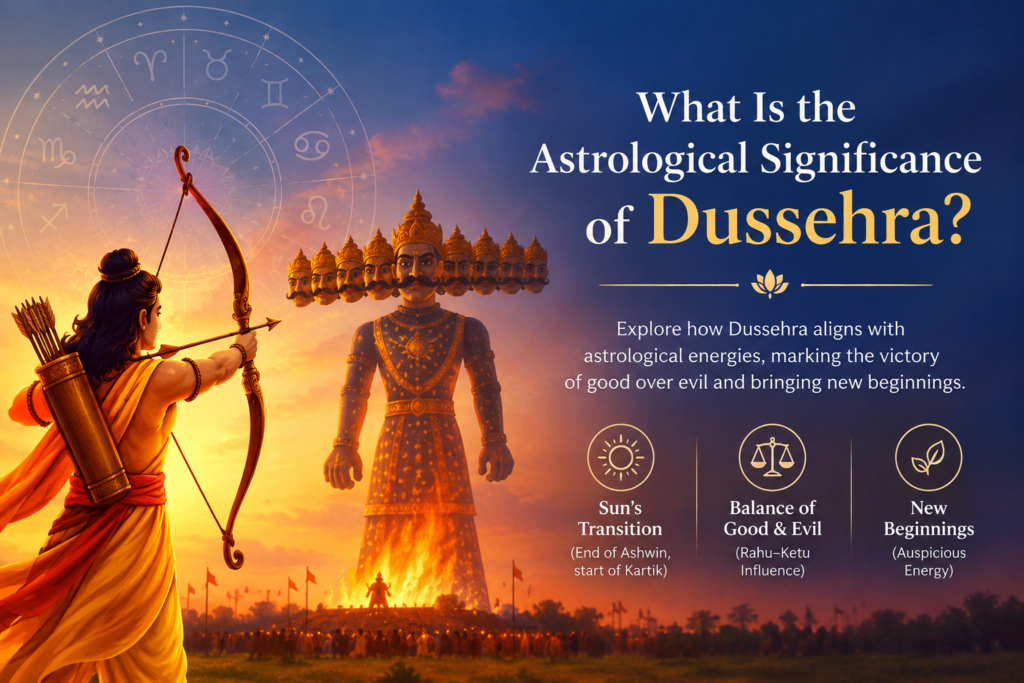
Astrological significance of Dussehra featuring Lord Rama, Ravana, and zodiac symbols representing the victory of good over evil and new beginnings.
Vijayadashami falls on Dashami, the tenth tithi of Shukla Paksha in the month of Ashwin. In many traditions, this tithi is considered auspicious by nature. Some people therefore begin important tasks on this day without searching for a separate muhurat.
It helps to separate belief from fact. The mythological stories and the Panchang-based dating are part of religious tradition. The idea that this day carries special astrological power is a traditional belief, not a scientifically proven claim. Vedic astrology treats it as a symbolic and cultural guide.
The burning of Ravana’s effigy is often read as letting go of ego, anger and pride. Many astrologers use this symbolism for reflection: which habits should be released before starting afresh?
Why Is Dussehra Associated With New Beginnings?
Vijayadashami follows the nine nights of Navratri. Traditionally, it represents the moment when effort, discipline and devotion are said to bear fruit. Many people therefore use the day to start new studies, music or art lessons, business ventures or personal goals.
In some regions, children begin formal learning on this day. Artisans and professionals worship their tools in Ayudha Puja. These customs reflect a mindset of fresh starts. A good beginning still depends on preparation and steady effort, and no festival day can guarantee success.
A practical approach is to write down one or two realistic goals, choose a small first step and begin with a sincere intention.
How Can Your Kundli Provide Personalised Astrological Insights?
A Kundli, or birth chart, is a map of planetary positions at the time and place of your birth. Vedic astrology divides it into twelve houses and studies how the nine grahas, or planets, are placed in signs and houses.
Expert Astrologers read this chart to understand tendencies in areas such as career growth, finances and personal growth. Dashas, the planetary periods, are studied to understand timing. Many people begin with an online Kundli prediction, which uses birth date, time and place. A detailed consultation can then add context.
For example, someone considering a career change may look at the tenth house and the running dasha, alongside skills and market realities. Treat such insights as guidance for reflection, not fixed destiny.
Kundli Matching and Relationship Planning
In Indian tradition, Kundli matching for marriage compares the birth charts of two people. The classical Ashtakoota method scores eight factors, such as temperament and compatibility. Astrologers also study planetary placements such as Mangal Dosha.
This is not a Dussehra ritual, and no one is required to do it. Some families simply find it useful when discussing marriage. Compatibility ultimately depends on communication, values and mutual respect, which no chart can replace.
Gemstones and Their Traditional Association With Planetary Influences
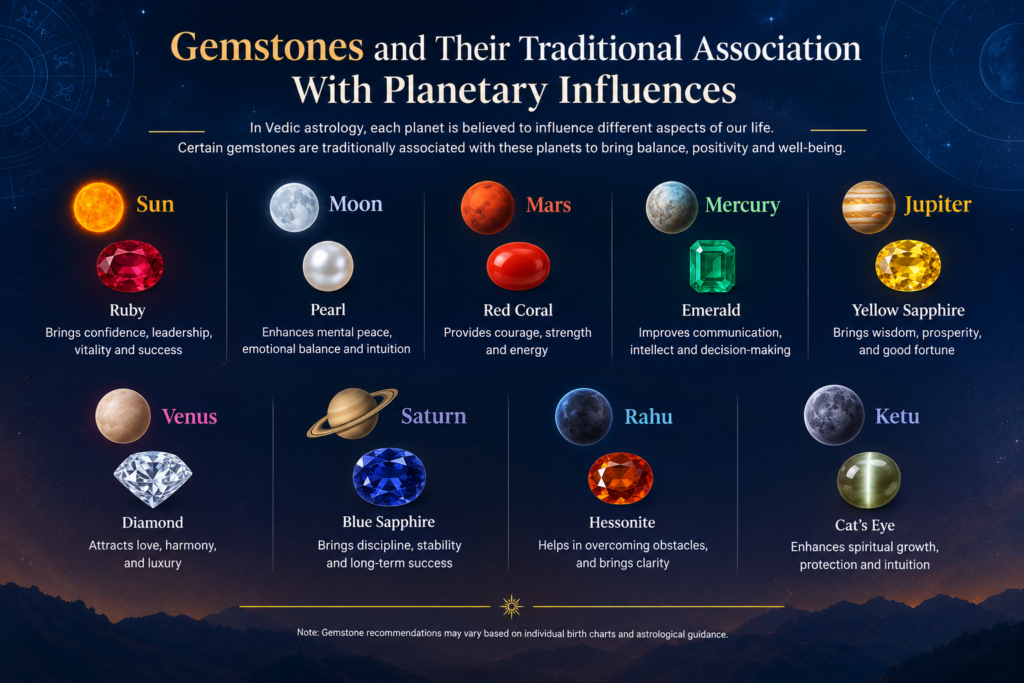
In Vedic astrology, each graha is traditionally linked with a gemstone. Ruby is associated with the Sun, pearl with the Moon and yellow sapphire with Jupiter, for example. These links are symbolic and rooted in classical texts.
A gemstone is not a festival purchase. Whether one is suitable depends on the individual birth chart. Astrologers weigh planetary strength, house placement and dasha before suggesting anything. A gemstone is a traditional supportive practice, not a guaranteed remedy, so seek personalised advice rather than relying on general lists.
Muhurat, Graha Shanti and Puja: Seeking Guidance for New Beginnings
A muhurat is an auspicious time chosen using the Panchang, which records the tithi, nakshatra, yoga, karana and weekday. Vijayadashami is widely considered auspicious, yet some people still consult an astrologer for the right time for a specific event. Timings vary by city, so please check a local Panchang.
Graha Shanti is a traditional puja performed to seek peace from challenging planetary influences. On Dussehra, many families also perform Shami Puja, worshipping the Shami tree, and Shastra Puja, honouring tools and books. These are acts of faith, discipline and gratitude. They are best seen as spiritual practices that support a calm, focused mindset, not guaranteed solutions.
Ultimately, Dussehra is an invitation to begin with clarity, humility and effort. Whether you consult your Kundli, perform a puja or simply set a sincere intention, the real work of any new beginning lies in consistent action.
FAQ Section
Is Dussehra an auspicious day to start a new business?
In Hindu tradition, Dussehra or Vijayadashami is considered an auspicious day for new beginnings. Many people start businesses, projects, or important activities on this day. Proper planning, financial preparation, and consistent effort remain essential for long-term progress.
How does Vedic astrology interpret Vijayadashami?
Vedic astrology associates Vijayadashami with the Dashami tithi of Shukla Paksha in the Hindu month of Ashwin. Traditionally, the day symbolises victory, courage, renewal, and the beginning of positive endeavours. These interpretations are rooted in religious and astrological traditions.
Can I consult an astrologer on Dussehra for career guidance?
Yes, you can consult an astrologer on Dussehra for traditional career-related Kundli guidance. An astrologer may examine the tenth house, planetary placements, and current Mahadasha or Antardasha. You can use these interpretations for reflection while considering your skills, experience, and career opportunities.
What is the role of an online Kundli prediction during Dussehra?
An online Kundli prediction interprets a birth chart using your birth date, time, and place. During Dussehra, some people seek this guidance when reflecting on career goals, relationships, finances, or personal development. Astrological interpretations should be treated as traditional guidance rather than guaranteed predictions.
Should I wear a gemstone on Dussehra for planetary benefits?
Some Vedic astrology traditions associate gemstones with particular planets. However, Dussehra alone does not determine which gemstone may be considered suitable for an individual. Those following this tradition may seek personalised astrological advice before making a decision. Gemstones are not scientifically established remedies for planetary influences.
What is the difference between Muhurat and Graha Shanti?
Muhurat refers to selecting a traditionally auspicious time for an activity using Panchang elements. Graha Shanti is a religious ritual performed to seek peace or balance in relation to planetary influences. Both practices have different purposes and are followed according to individual beliefs and traditions.