
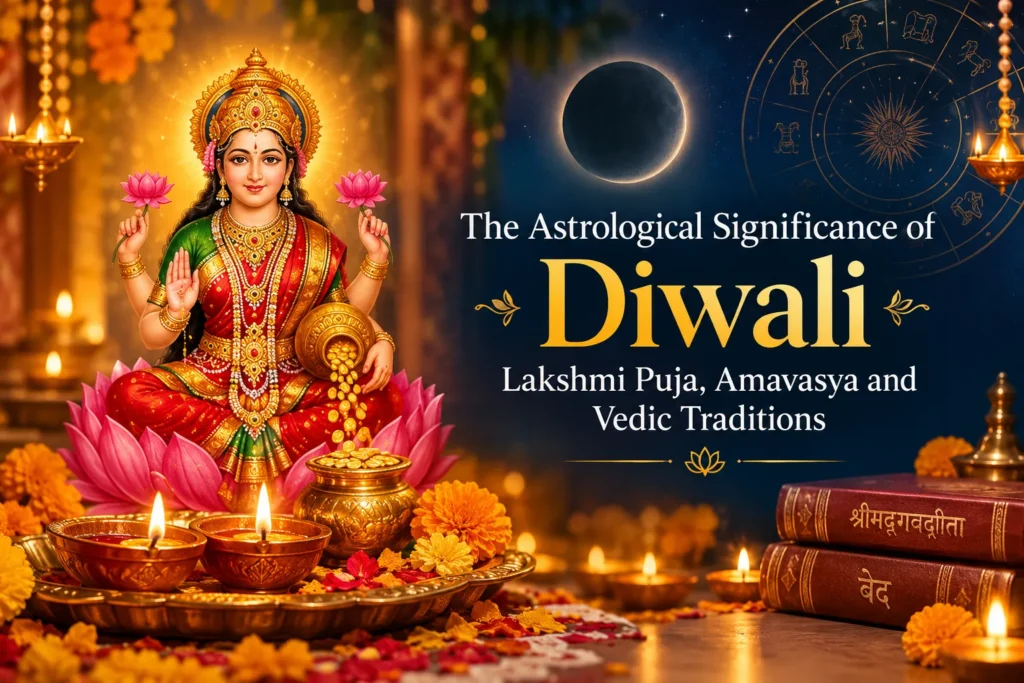
Diwali and Vedic Astrology: Significance, Amavasya and Lakshmi Puja
The astrological significance of Diwali lies largely in its timing. The festival is observed on the new-moon night (Amavasya) of the Hindu lunar month, when tradition uses the darkest night to welcome light, prosperity and fresh intentions. Diwali also carries deep cultural and spiritual meaning for Hindus, Jains and Sikhs. This guide explains how Diwali and Vedic astrology connect, what Amavasya and Lakshmi Puja mean, and how personal Kundli guidance differs from general festival beliefs.
What Is the Significance of Diwali?
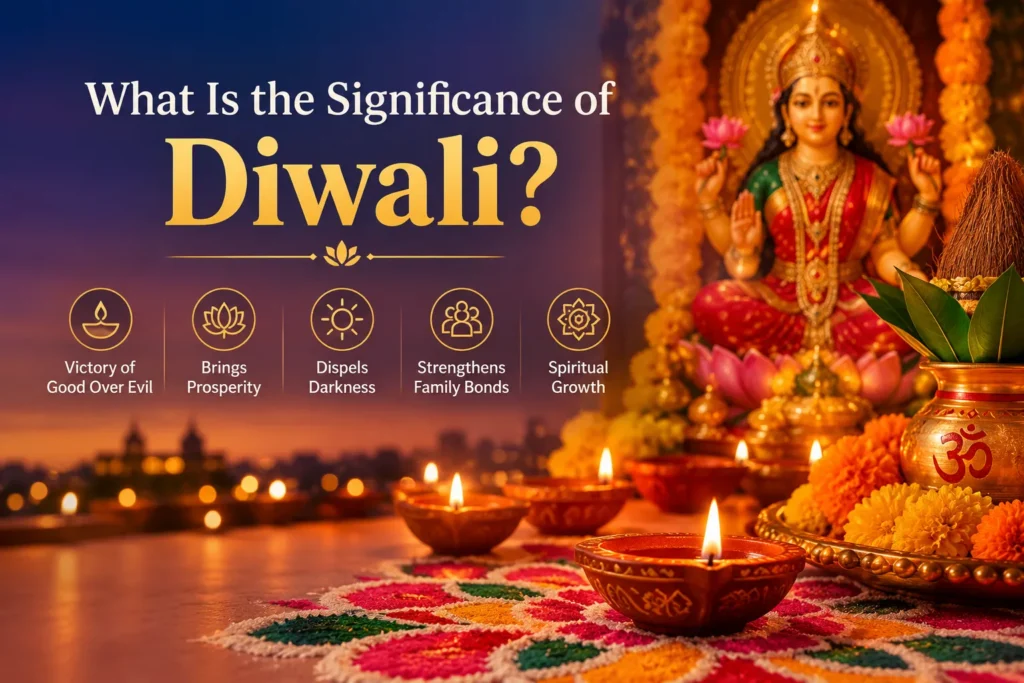
The significance of Diwali begins with its name. Deepavali comes from the Sanskrit dipavali, meaning “a row of lights“. Across traditions, the lamp stands for knowledge over ignorance, hope over despair, and good over wrong. For many business families, the festival also marks a fresh start to the account year.
The importance of Diwali also lies in its variety. Many Hindus in North India link it to Rama’s return to Ayodhya, while in the South it is often associated with Krishna’s victory over Narakasura. Some communities honour Lakshmi’s birthday or her marriage to Vishnu, and Bengal observes Kali Puja. Jains remember Mahavira’s liberation, and Sikhs commemorate Guru Hargobind’s release. No single story is the only correct one.
Diwali and Vedic Astrology
Diwali and Vedic astrology meet mainly through the Panchang, the traditional Hindu almanac. Its five limbs are tithi, vara (weekday), nakshatra, yoga and karana. Festival dates follow lunar calculations rather than the Gregorian calendar, which is why Diwali moves between October and November each year.
A tithi is a lunar day, completed each time the Moon gains 12 degrees on the Sun. Because the Moon’s speed varies, a tithi is not exactly 24 hours long. Panchang calculations can also differ by region and method, so two almanacs may occasionally disagree on timings.
It helps to keep three layers separate.
Tithi is a calendrical and astronomical measurement.
Festival observance is a religious and cultural tradition.
Ideas about luck, finances or planetary influence belong to astrological interpretation, which is a traditional belief system and not a scientifically proven one.
Diwali’s astrological meaning is therefore best read as symbolic and customary, not as a forecast for every zodiac sign.
Diwali Amavasya Significance
Amavasya is the new-moon tithi. Astronomically, the Moon lies between the Earth and the Sun, so its lit side faces away from us and it is effectively invisible. In the Panchang, this is the 30th tithi, which closes the waning fortnight (Krishna Paksha).
The Diwali Amavasya significance is largely symbolic. The darkest night of the lunar month becomes the setting for lamps, so the festival places light directly against darkness. Lakshmi Puja is traditionally performed in the evening of this night.
⚠ Try not to blur the levels. The new moon is an astronomical event. Reading it as “inauspicious” or “spiritually potent” is a religious or expert astrological interpretation, and traditions differ. Month names also vary, depending on whether a regional calendar ends its months at the new moon or the full moon, the same Amavasya may be called Ashwin or Kartik. When the Amavasya spans two civil days, Panchang rules decide, so consult a trusted local Panchang for timings.
Lakshmi Puja Significance in Astrology
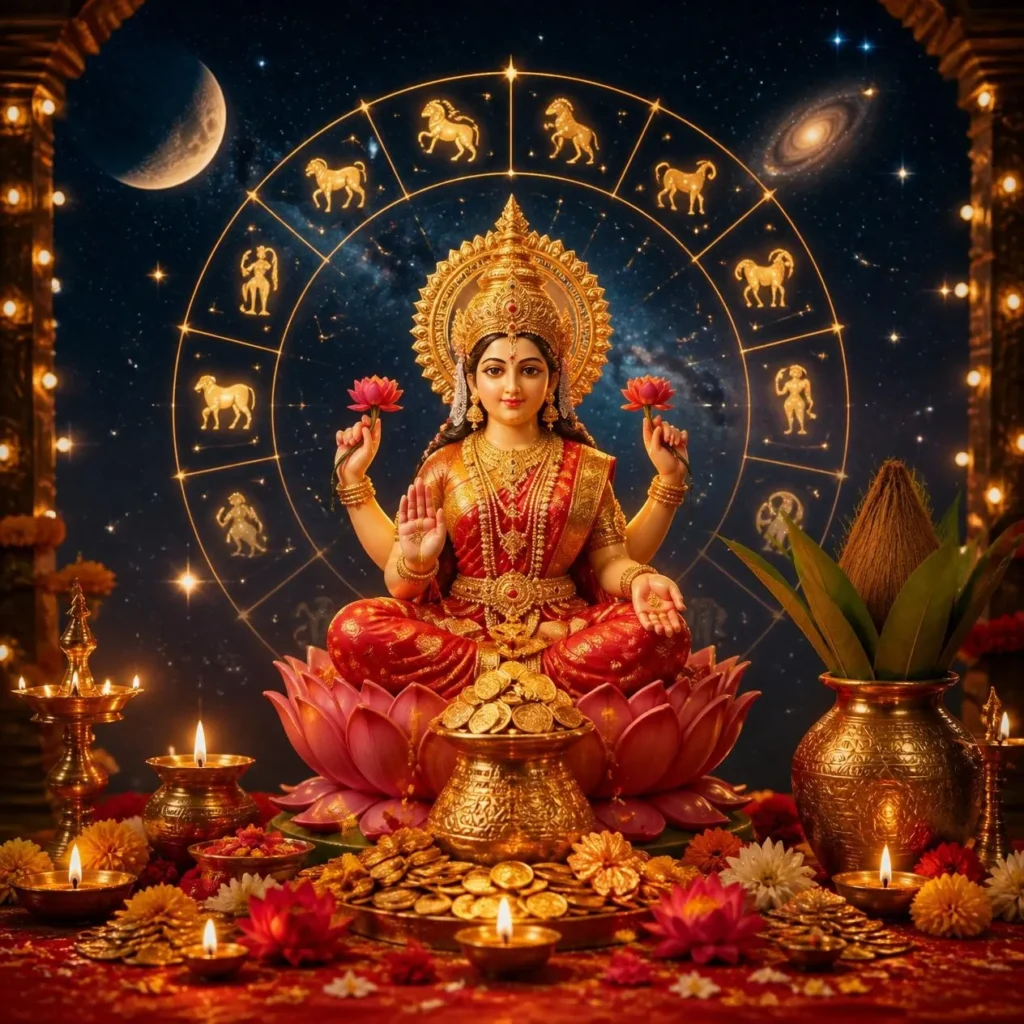
Lakshmi Puja is the central Diwali ritual in many Hindu homes. Goddess Lakshmi represents prosperity, wellbeing and abundance. Lord Ganesha, commonly worshipped alongside her, is associated with wisdom and auspicious beginnings. Together they suggest that wealth is best guided by good judgement.
Families traditionally light lamps and keep doors open, hoping Lakshmi will bless the household. Many business communities also begin new account books around this time.
Where does astrology enter? Mostly through timing. Families consult a Panchang for the evening hours considered suitable for puja. The ritual itself is devotional. Whether a planetary placement supports or challenges someone’s finances is a separate question that depends on that person’s Kundli, not on the festival.
Neither Lakshmi Puja nor any planetary position guarantees wealth or success. Within these traditions, prosperity is generally understood as blessing combined with effort, honesty and gratitude.
What Does Diwali Symbolise in Everyday Life?
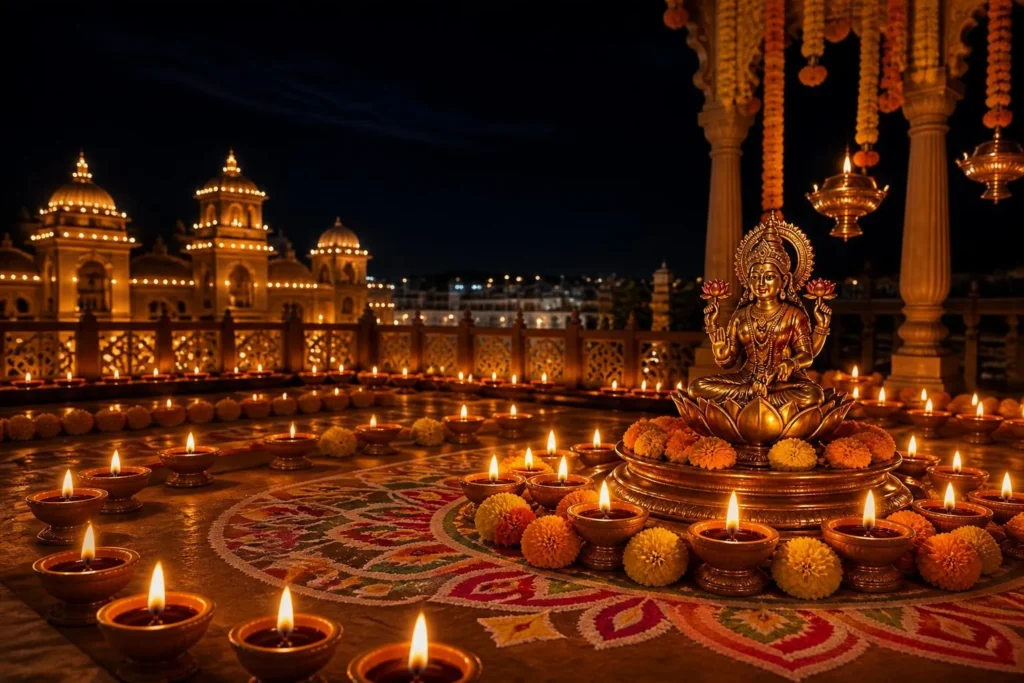
What does Diwali symbolise beyond the puja? Reflection, gratitude, generosity, knowledge and renewal. These themes translate into ordinary decisions. Cleaning the home can become a prompt to clear clutter. The new-year spirit can encourage reviewing last year’s spending and settling small dues. Gratitude can mean thanking people who helped you, and generosity can mean supporting someone in need.
Lighting a lamp can also stand for a commitment to learn something new or mend a strained relationship. None of this is a supernatural guarantee. These are habits that can improve daily life whatever one’s beliefs.
How Does Your Personal Kundli Relate to Diwali?
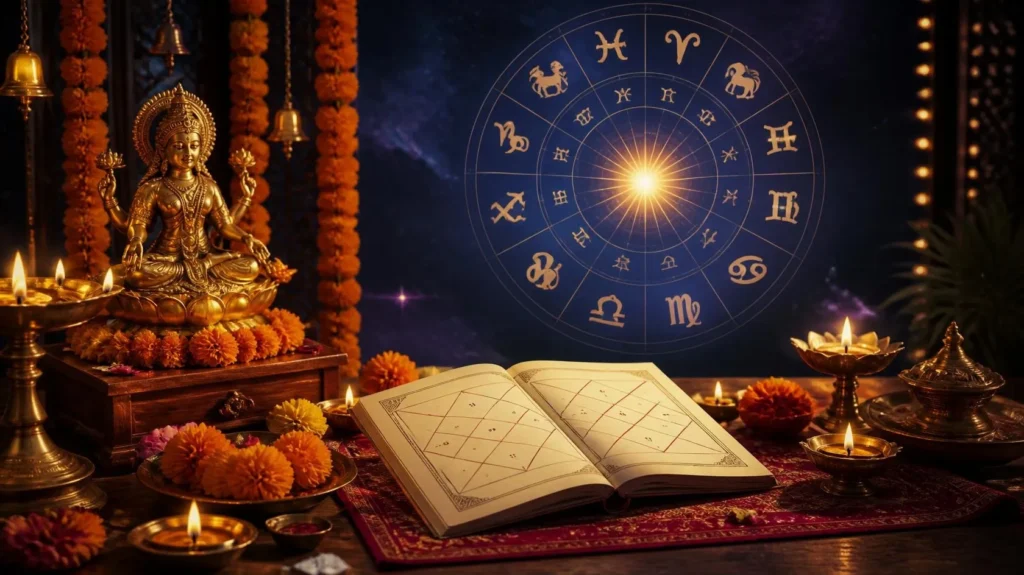
Festival beliefs apply to everyone who observes them. A Kundli applies to one person. It is a birth chart calculated from your date, time and place of birth. When discussing career, relationships or finances, Vedic astrologers traditionally examine the Lagna (ascendant), planetary placements by sign and house, nakshatras and dasha periods together.
Diwali alone cannot determine anyone’s future. Two people lighting the same lamp on the same night have different charts, and an accurate birth time matters. If you are new to the subject, start with this guide to understanding Vedic astrology.
Readers who want individualised guidance can explore online Kundli prediction with Astrologer Jyoti Vora for personalised birth-chart guidance. Readings are interpretive guidance, not guaranteed outcomes.
Traditional Ways to Observe Diwali Mindfully
Practices vary by family and region, and none is mandatory. Some respectful options:
Frequently Asked Questions About Diwali and Astrology
1. What is the astrological significance of Diwali?
It lies in Diwali’s observance on the new-moon tithi, which tradition treats as a night for light, worship and renewal. These are customary meanings, not universal predictions for every sign.
2. Why is Diwali celebrated on Amavasya?
Tradition places the festival on the darkest night of the lunar month so that lamps and Lakshmi Puja symbolise light overcoming darkness. Reasons vary by region and community.
3. What is the connection between Lakshmi Puja and Vedic astrology?
Mainly timing: families consult the Panchang for suitable hours. The puja is devotional, and neither ritual nor planetary placement guarantees wealth.
4. What does Diwali symbolise spiritually?
It symbolises knowledge over ignorance, good over evil and inner renewal. Different communities link it to different stories, but the lamp remains the shared symbol.
5. Can a personal Kundli provide insights into career or financial questions?
Astrologers traditionally study a Kundli’s planetary placements and dashas when discussing such questions. It offers interpretive guidance, not scientific proof or guaranteed outcomes.
Conclusion
Diwali’s significance is cultural, spiritual and astrological in the traditional sense. It combines lunar timing, Amavasya symbolism, Lakshmi Puja and the universal image of light. Observing it mindfully matters more than chasing promises. If you want guidance specific to your own birth chart, personalised Kundli consultation is available.
Want Guidance Specific to Your Own Birth Chart?
Go beyond festival beliefs — book a personalised Kundli consultation with Astrologer Jyoti Vora.